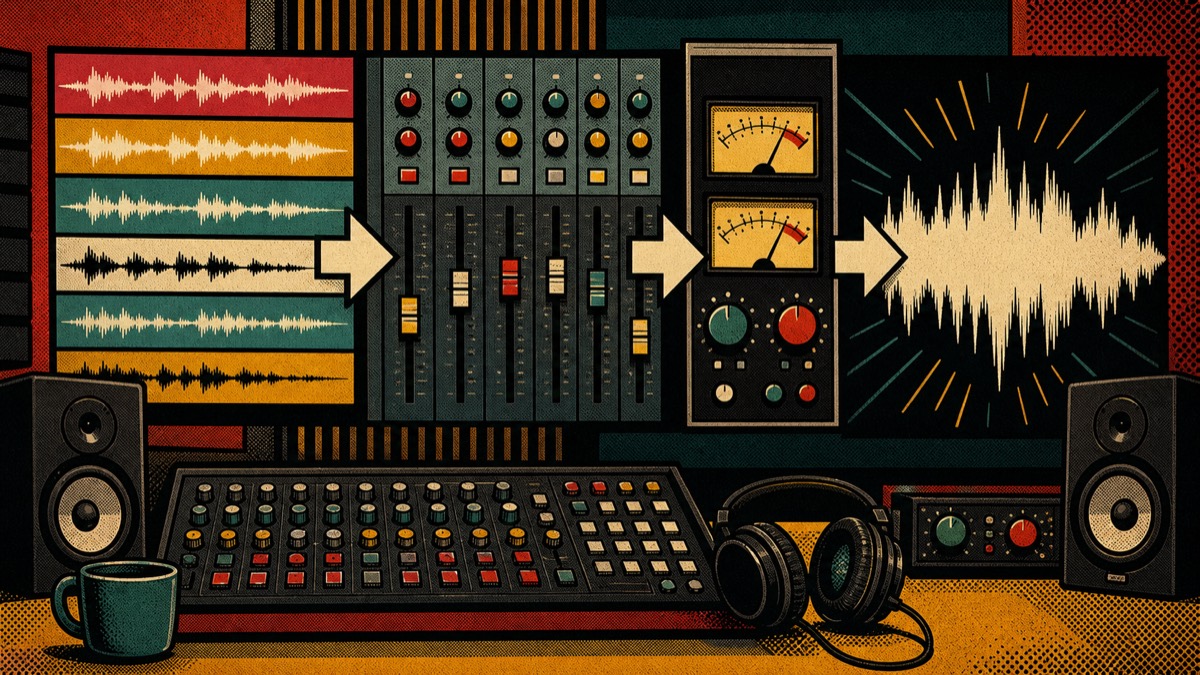
Quick answer: mixing balances and shapes the individual parts of a recording, while mastering prepares the finished mix so it sounds consistent, polished, and ready for release.
When a song, podcast, or voice recording is finished, it usually still needs technical and creative work before it feels ready to release. Two words come up again and again at this stage: mixing and mastering. They are connected, but they are not the same thing.
In simple terms, mixing is about balancing the separate parts of a recording. Mastering is about preparing the final mix so it plays well everywhere.
What is mixing?
Mixing happens after the recording stage. The engineer takes the individual tracks, such as drums, bass, guitars, keys, vocals, backing vocals, or podcast microphones, and shapes how they work together.
A mix might involve volume balance, EQ, compression, panning, reverb, delay, editing, tuning, cleanup, and automation. The aim is to make the recording feel clear, musical, and emotionally right.
- Can the lead vocal be heard clearly?
- Does the low end feel controlled?
- Are instruments fighting for the same space?
- Does the track build and move in the right places?
- Does the podcast conversation sound natural and even?
What is mastering?
Mastering is the final stage after a mix is approved. Instead of working with every individual track, the mastering engineer usually works with the finished stereo mix. The goal is to make that final file translate well across phones, cars, headphones, laptops, streaming services, and speaker systems.
Mastering may involve subtle EQ, compression, limiting, stereo control, loudness adjustment, spacing between tracks, and preparing files in the correct format. Good mastering should make the final result feel finished without changing the heart of the mix.
Mixing shapes the song or episode. Mastering prepares the finished mix for release.
Why the distinction matters
If the vocal is too quiet, the kick drum is too loud, or a podcast guest sounds much duller than the host, that is usually a mixing issue. Mastering can improve the final presentation, but it cannot fully rebalance separate parts once they have been combined into one stereo file.
That is why it is important to get the mix right before mastering. Mastering is not a rescue stage for unresolved mix decisions; it is the final polish on a mix that already works.
How this applies to podcasts
For podcasts, mixing often means editing the conversation, reducing background noise, balancing speakers, adding intro or outro music, and making the episode comfortable to listen to. Mastering then brings the final episode to an appropriate loudness and consistency for publishing.
This matters because listeners may be in cars, on headphones, or walking outside. If the volume jumps around, people notice quickly. A clean podcast mix and master helps the content feel more professional without distracting from the conversation.
How this applies to music
For music, mixing is where the identity of the track is shaped. It decides how upfront the vocal feels, how wide the guitars are, how tight the drums sound, and how much space each part has. Mastering then makes the final mix cohesive, controlled, and ready for release.
If you are releasing an EP or album, mastering also helps the tracks sit together so the listener is not reaching for the volume control from song to song.
What should you book?
If you have raw recordings or separate stems, you probably need mixing first. If you already have a finished mix that you are happy with, you may be ready for mastering. If you are unsure, send a rough bounce and explain what stage the project is at.
A good studio will help you work out what the recording needs, rather than pushing you into a process that is not right for the project.
Mixing and mastering in Glasgow
Triple M Studios provides recording, mixing, mastering, podcast recording, and production support for artists and creators in the Glasgow area. If you are preparing a track, EP, podcast, or voice recording for release, the studio can help you decide whether your project needs mixing, mastering, or both.